Preaching the Thomas Text (John 20:19-31)

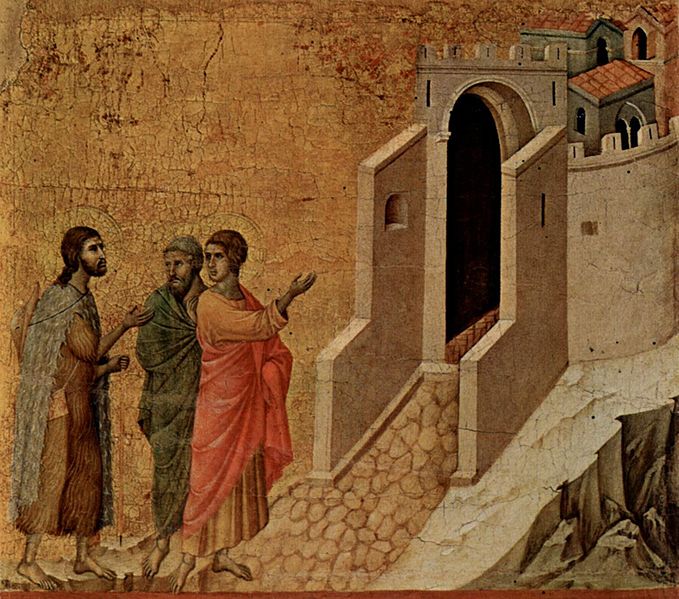
In the traditional reading of thiDoubting_Thomas_sms post-resurrection appearance, Jesus rebukes Thomas for doubting and commends believers who come to faith without requiring the “proof” of nail marks. This reading still stands up, I think, even if many preachers these days like to present Thomas as a model for people who struggle to believe, reassuring their listeners that doubt is a normal, even necessary, part of a life of faith that is honest and maturing. Hardly any of the post-resurrection stories in the New Testament ignores the vexed nature of Easter faith (see for example, Lk 24:41; Mt 28:17). It is only fair and helpful, then, to point out that if we have trouble believing, we are not the first, and we are not alone.

What a “doubt is a good thing” reading of this story may miss, however, is its ecclesial dimension. When one looks at the story through that lens, Thomas may not be guilty so much of incredulity as he is of singularity. Asking for evidence (the same evidence Jesus had already granted to the others in v. 20) is not his biggest problem; refusing to trust the witness of sisters and brothers is. He doubts the resurrection of Jesus, but more significantly he doubts that the church has faith and wisdom to give him to supply his lack. Thomas wants a private experience, a revelation of his own, prefiguring not so much our modern intellectual rejection of particular articles of the creed as our unwillingness to grant the tradition any wisdom that does not first pass the test of private reason, personal experience, and emotional comfort. Thomas was “not with them” (v. 24) in more than a geographical sense.

Jesus does not commend unseeing believers (v. 29) because they accept the “fact,” much less the doctrine of his resurrection, but because they trust the church’s testimony. They open-heartedly receive the tradition of his rising. They are “together” in this handed-on faith that is not the private accomplishment of any one of them. The communal way in which we come to faith is an important preoccupation of this story, and of many others that were recorded, John says, so that we might come to believe (v. 31); but believing as such is not the final goal. The reason the evangelist is eager for us to believe in the first place is “so that [we] might have life” (v. 31), life with Jesus—a life found most richly and mysteriously through insertion in the fellowship of disciples. It is not for nothing that the other readings this Sunday focus on the fellowship (Acts 4:32-35; Ps 133; 1 Jn 1:1-2:1) and aim, in part at least, to impress upon us “how good and pleasant” (Ps 133) a company it is.

In contrast to the idea that a person comes to faith through an individually-achieved struggle for private conviction in this small moment now, the preacher might present coming to Christian faith as a shared project of trust and mutual traditioning in an ample fellowship of believers of all times and places who, by the grace and power of the Spirit, edify one another in strength, and supply one another in lack.

We might speak of the church in this season of Easter as a company of disciples learning to pool the gift of faith, eagerly inquiring into and trusting each other’s experience of God, and ever building thereby a great storehouse of small faith and great, new and seasoned, questioning and serene, from which we borrow and to which we lend, generation to generation, until he comes again.

Another tack for preaching the text is to remove the spotlight we always shine on Thomas and put it back on Jesus, the first born from the dead. His bodily appearance is full of mystery, to be sure, and one could get sidetracked attempting to explain the physics of his penetration of that locked door or the funky nature of resurrection bodies. Better to ponder instead the tender condescension of the Living One. He knows his disciples are afraid for their lives—he grants them encompassing shalom. He knows they need his continued presence and power—he breathes Spirit into their flagging hearts. He knows they have lost their sense of purpose—he commissions them to a ministry of witness and reconciliation. He knows they can hardly believe he is their Jesus, the same one who was nailed to the cross—he shows them his wounds. He knows Thomas is missing—he comes back the following week to make sure the Twin is not left out. He knows the last thing they need to hear is that they failed him miserably and he is disappointed—he utters not a single word of recrimination.

It is not surprising that in the presence of such immense tenderness, our text says (in what has to be one of the biggest understatements of the Bible) that the disciples “rejoiced.” The preacher could frame Easter in these terms, as the in-breaking of a new age to come in which there will be only compassion, peace, and restorative love like this, for all.

The preacher might also wish to inquire into the ethical edges of the text. A starting point might be Jesus’ refusal to blame and exact his due, thus breaking the relentlessly violent cycle of revenge by which the ordinary world turns. One might also explore further the text’s stunning image of a Risen One who in the life of glory does not leave his wounds behind—the signs of his passion for us persist in his new flesh, such that when we see similar scars in the flesh of the neighbor, or on the body of the world, we will recognize him; and as we place our hands in mending on the wounded ones he loves, we too will exclaim on awed and bended knee, “My Lord and my God!” (v. 28).

Watching at Graves


0

Mark 15:46-47

After Joseph bought some fine linen, he took Jesus down and wrapped him in the cloth. Then he placed him in a tomb cut out of rock, and rolled a stone against the door. Mary Magdalene and Mary the mother of Joses were watching. They saw where he was laid.

Reflection

Jesus’ death has weighty theological meaning, but when all is said and done, it is also, simply, the death of someone we loved. That’s why Joseph, who gives Jesus’ body a decent burial, is remembered so affectionately in Christian tradition.

We care about the way our beloved dead are treated. We attend devotedly to the practicalities of their deaths, performing for them the last loving services affection requires. Because Joseph does these things for Jesus, all four gospels make sure we know his name.

But Joseph isn’t alone. Two women who loved Jesus watch where he is laid. They take note. They remember the place. They will come back with spices in the morning.

Jesus’ death was cruel, but at least it was noticed and mourned. Countless other deaths, the expendable refuse of indifferent empires, go unnoticed and unmourned. Deprived of the loving obsequies of friends, no one knows where their bodies are. No one can come back to them with spices in the morning.

On this holy Saturday, Jesus sleeps like a seed in the earth. We know where they placed him, and we’re keeping vigil there. It’s a good day to ask who is keeping vigil with the rest.’

Who is taking note of bodies not interred with tender care, but flung aside by hatred, power, and pride? Who is tracking down the precious places where they sleep? Who is brave enough to go there, resolute enough to stay, witnessing, until the dear Life that tomorrow raises Jesus from the grave summons them up also from the dead?

Prayer

Remember the dead, known and loved, O God; and the dead injustice casts aside and willfully forgets. Make us watchers with you over every body, finders with you of every grave, life-givers with you to all who lie unnoticed behind such heavy stones.


No “Christian Seders,” Please!

155NOTE: In March 2013, I posted a series of Facebook Notes about so-called “Christian Seders” and the special obligation Christians have in Lent and Holy Week especially to be vigilant about the way our observances may have an impact on Jews, Christian understandings of Judaism, and related matters. I have been asked by several colleagues to re-post these reflections this year. I am happy to do so. I need to make it clear, however, that I am not an expert on these matters. What I say below is my take on controverted questions, born mostly of my own reading and of my interfaith relationships. Please take them as such.

No “Christian Seders,” Please!

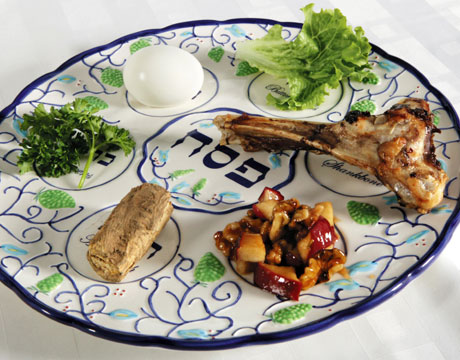
With Holy Week on the horizon,  many Christian congregations have started announcing “Christian Seder” meals to observe Maundy Thursday. People of good will recognize this as a devout and well-intentioned attempt to honor the Jewishness of Jesus, and the Jewish roots of the Christian communion meal which was, Christians say, instituted by Jesus on the night he was handed over–a night that fell, according to the gospel accounts, during the annual Passover observance. It is understandable, therefore, that Christians would desire to commemorate this institution with a nod to its original context.

There are many difficulties attaching to the practice of a Seder meal by Christians, however (the biggest being that a Seder is simply not for Christians, but we’ll get to that later). Some of them are historical. For example, we really do not know for sure what the “original context” of Jesus’ so-called Last Supper was.  We think we do: since Sunday School we’ve been taught it was a Passover meal, or Seder; but scholars continue to debate the precise character of the meal Jesus shared with his disciples that night. One thing we know for sure, however, is that, although it may have been a Passover meal of some sort, it was not a Seder in the modern sense. We know this because the introduction into Jewish ritual life of the Seder we know today came generations after the time of Jesus

Modern day Jewish celebrations of the Passover are a melding of traditions that arose after the destruction of the Temple, and developed through Late Antiquity into Middle Ages. It is a still-developing tradition, too, with additions being made to the Haggadah even to this day. Ironically, some scholars believe that the modern Seder developed in part at least as a reaction and resistance to the growing influence of the Christian church and its sacred meal, the Eucharist. If that is true, Christians celebrating a Seder in the form their Jewish neighbors are using are celebrating, at least in part, a meal that was meant to criticize them and establish the distinctiveness of Jewish rites over against Christian ones. This anti-Christian critique is no longer prominent in most contemporary Seders, but this curious history of the Seder still makes for a polemical mish-mash that, if known by the organizers of “Christian “Seders, might take away some of the romance of the night!

So for starters, to hold a Seder as a way to commemorate the “background” meal Jesus shared with his disciples and which he “turned into” a Communion meal (as I have heard some Christians say) is anachronistic—it is a tradition Jesus did not know. More precisely and significantly, however, it is a tradition that developed into its present forms after Jews and Christians had taken separate religious paths. It’s a tradition, therefore, that Jews and those who became Christian never shared in the first place. It belongs to Jews only and distinguishes them as Jews in ways that make any Christian usage of it seem presumptuous, especially given the fraught and violent history of Christian usurpation and replacement of all things Jewish that we call supersessionism.  Given this history and this ongoing supplanting of the Jewish covenant, I wonder if we would do better to spend our time reflecting on what often befell Jews in Holy Week in many places in medieval Western and Eastern Europe—the pogrom—than to spend time appropriating one of their characteristic rituals and making it our own.

Holding a Seder in a Christian church as a Christian event during Christian Holy Week is dicey. Dicier still is  celebrating a Eucharist in the course of the Seder meal or finishing the Seder with a Communion service. This  sends an unintentional but real message that the important thing about this Seder is what Jesus did to transform it and make it into something else. In other words, what we imply is that the Seder’s real value is to point towards or usher in Communion– that Communion is really what it’s all about, when all else is said and done. This is to write Jews out of their own story. We have already succeeded in often writing them out by the way we often use “Old Testament” texts in preaching and teaching—let’s not turn their meal into our meal for our devotional agendas, just because it feels more authentic or rootsy for us to do so.

Ritual is, after all, lodged in and arises from a community’s corporate experience; and in this case, it is the experience of suffering and liberation, slavery and salvation that Christian share with Jews in a kind of mythical and mystical sense, but not in fact: we are not Jews (the vast majority of us, anyway) and we cannot and do not celebrate a Seder out of anything remotely resembling the lived experience of Jews, or with the theological and spiritual worldview such experience generates. We can and must appreciate it, revere it, admire it, learn about it, even participate in it (for example, when invited into a Jewish home during Passover), but it is and never will be ours, and we ought not treat it as if it were. Just because we are a “successor tradition” doesn’t mean that everything that “they” have is or should also be ours.

There is a danger that in a well-intentioned attempt to honor the church’s Jewish origins, and (we think) do what Jesus did that night, we may end up caricaturing the Jewish ritual we claim to honor. It can be a kind of pious play-acting that is a very far cry from the profound communal anamnesis that is proper to “this night unlike any other night.” Only Jews can experience Passover in such a way that those who ate in haste and fled the Egyptians through the Sea have no spiritual  advantage over those who sit at the Seder table today.

Beyond all this is the basic question of why some of us feel we need to hold a Seder in Holy Week in our Christian congregations in the first place. The treasure chest of Christian liturgical ritual that pertains to the Paschal season is so enormously rich that one wonders why we would turn to someone else’s. Perhaps it is because so few of our churches celebrate this range and depth of options that we cast around looking for something meaningful and rich like we imagine a Seder to be.

What could Christian do instead during Holy Week if we take seriously the objection that a “Christian Seder” is anachronistic, a contradiction in terms, and a potential offense to Jews today for whom the Passover rituals are a living tradition, and not a sort of curious antiquarianism?

If we really want to understand the mysteries of Jesus’ last days, we might consider participating in the classic liturgies of the Triduum, the Great Three Days of Maundy Thursday, Good Friday, and the Easter Vigil. It is there, in the experience of those ancient liturgical traditions that we encounter the meaning, depth, and power of our salvation. In the rituals associated with Passover, Jews recount their story of redemption. In the liturgies of the Great Three Days, and especially in the Easter Vigil, Christians recount and relive our own.

In the end, congregations that hold “Christian Seders” may simply desire to learn about Judaism, better understand their Jewish neighbors, and grapple with the Jewish roots of Christianity—all of which is commendable, even urgent. They should go ahead and do so, not with a Christianized Seder, but with a visit to their local synagogue for a talk with the Rabbi about how best to facilitate that understanding with respect. Perhaps the Rabbi would come and talk to a group in that congregation about what a Seder entails and what it means to Jews. Or perhaps a Jewish friend might have an extra place at their Seder table for some folks from the Christian congregation this year.

And if Maundy Thursday still cries out for a meal, hold a potluck, an agape meal, a love feast, an elaborated Communion service—choose from the Christian repertoire of feasts to celebrate with— but let the Jews have their feast. No Christian Seders, please!

More on “Christian Seders”

At the risk of overdoing it (I am not in fact persuaded that we can ever overdo this), I want to add to my previous Note about “Christan Seders” the following precision:

On Maundy Thursday, many Christian congregations hold “Christian Seders” in conjunction with Tenebrae, Holy Communion, and other liturgical commemorations of the night Jesus was handed over.  They give various reasons for doing so, but in general they use the Seder as a way to recall and explore the Jewish roots of our faith, to honor the Jewishness of Jesus, to lend historical context to the institution of the Christian Eucharist, and to learn about Jewish ritual practices (i. e., “teaching Seders”) in an open, interfaith spirit.

In some cases, these Seders are led by Jews—a local rabbi, or Jewish friends of the congregation—but the majority are not. They are a wholly “in-house” affair, for Christians by Christians. My objections are directed at these in-house kinds of  “Christian Seder” celebrations.

Congregations that borrow or adapt the modern Jewish Seder for their own devotional purposes on Maundy Thursday during Holy Week need to understand that what they are doing is not a neutral act. Apart from other significant theological and historical objections that should be made to a “Christian Seder,”  [see my previous “Note”] the long, violent and painful story of Christian appropriation of Judaism itself—replacement theology or ‘supersessionism’—should be enough to make us think twice about doing it.

It is no accident that many a medieval pogrom erupted during Holy Week. It was a time rife with anti-Jewish preaching that placed the blame for Jesus’ death on Jews—not just on the ancient Jews, but on all Jews— and, in some cases, directly called for unsparing violence against them. Whenever Christians celebrate a “Christian Seder” that includes or culminates in Holy Communion, it is also chillingly instructive to recall that one of the great medieval slanders against the Jews is that they routinely committed sacrilege against the communion wafer in all kinds of horrific and bloodthirsty ways. This is the history we ineluctably carry with us whenever we do something like celebrate a “Christian Seder.”

My objection to the “Christian Seder” is not about the potential it has for offending Jews. It has that potential, and it does offend many Jews, and avoiding this offense is a good thing to want to do, and I do want us to avoid giving it! But the bigger issue for me is the insidious impact it can have on us Christians.

Let’s face it, despite years of interfaith  efforts, many Christians continue to assume reflexively that Christianity has supplanted Judaism in God’s plan and affections. We might not say it that way, but it shows in the way we use certain biblical texts, talk about a God of Love (Christian) and a God of Wrath (the “Old Testament God”), and juxtapose Law and Grace—in these cases and others, the clear implication is that Christianity has not only succeeded Judaism, it has superseded it.

In their everyday dealings with Jews (if they have such connections), most mainline Christians probably don’t regard the religion of their neighbors, friends, and coworkers as inferior to their own; but in church, in the course of hearing scripture and sermons on scripture, during certain liturgical seasons, and in devotional conversations, an old reflex asserts itself. Our inner Marcionite emerges, and as long as no one corrects us, we continue to operate in the universe of stereotype and slander that for centuries made it possible for Christians to see it as a religious duty to defame and slaughter Jews. And the fact that we do so often unwittingly makes it all the worse.

This is my point: not only because we have a long history of appropriating Judaism for Christian  ends, making of it a mere preparation for the true faith and regarding its characteristic practices as mere foreshadowings and symbols of the real things, we are still doing it today. The practice of a “Christian Seder” is a good example of just how unexamined this fraught relationship remains, and thus how easily its consequences could be visited on our neighbors again, even in our enlightened, interfaith, tolerant, and inclusive age.

That it could never happen here, that it could never happen again, that we would never do that—these are the lazy assumptions that allow us to meander through Holy Week up to our necks in the dangerous waters of supersessionism, playing out again and again the old patterns of reflex disdain.

Contempt takes many forms: I think the celebration of a Seder by Christians and for Christians for our own Christian agenda is one of them. It may seem devout and altogether benign, even constructive, on the surface; but it is just one more in a long sad line of things we have tried to steal from Jesus’ people in his name, as we have systematically written Jews out of their own story because, we say (not without truth), it is also in a deep sense our story too. And if it is also our story (and here we go wrong) we can do with it whatever we please.

Although holding a Seder (for Christians by Christians for a Christian agenda) may seem like a devout and constructive thing to do, and no doubt for many Christians it lends meaning to the Holy Week journey, it is an unavoidably fraught activity. Our anti-Jewish history has earned us a particular responsibility to make sure that our embrace of the Jewish heritage is serious, respectful, self-conscious and well-considered. We may not borrow, play-act, adapt, or otherwise appropriate anything Jewish like a Seder without carrying with us into that activity this whole history.

Remembering and telling the Jewish story is one of the Seder’s most characteristic features. Maybe instead of holding a Seder we should make time in Holy Week remembering and telling our own story, lamenting and repenting the sad history that haunts us still, and looking to Christ for the grace to change it, once and for all.

Postscript on “Christian Seders,” supersessionism, and reading Scripture

Some of you asked me to make more widely available this comment I left in a thread about the “Christian Seder” business. It concerns supersessionism and the Bible. Here it is:

I do not mean to say that we Christians cannot read texts from the Bible (”Old Testament”) and find in them Christological meaning. I think it is perfectly appropriate for us who hold (and have tenaciously held since the days of Marcion) to both ‘testaments’ as one Bible to read ‘backwards and forwards’ in this way.

Within the household of the Christian church, I believe we can own and interpret Hebrew Scripture faithfully, without  contempt, even when the meaning we find in the texts is not its “original” meaning for the people who gave the world the Bible.

I don’t think it is necessarily a usurpation of a supersessionist variety for us to cherish, for example, the suffering servant text in Isaiah as having something to do with the way we think about Jesus, or the text about the young woman conceiving as having something to do with the way we think about Mary, as long as at the same time we also know that it doesn’t in fact have to do with Jesus or Mary, and that it has a meaning of its own not only for the Jews “back then,” but also for the ongoing community for whom the Book is a living testament.

What we cannot do is say ‘This (Mariological or Christolical reading) is THE meaning of the text.” We must say instead, “This is the way we (Christians) read it in the light of our religious experience and tradition.” There’s a difference, I think, between reading the ‘Old Testament’ in a Christian way and circumscribing its universe of meaning to the Christian reading.

In short, no Christian in the pew should ever come away from a sermon on the suffering servant text thinking it is a Christian passage, even if they’ve been helped to see that, while it does not refer to Christ, it can and does help us think about, know, and love him.

To avoid “writing Jews out of their own story” when we engage in a “Christian” reading of the Hebrew Scriptures, then, we need to operate on two levels at once: on the level of the text as an expression of a particular people’s religious experience, which is not ours; and on the level of the text as the Church hears it in the context of its its particular experience of Christ.

This double-vision may oblige us, for example, to refrain from a too-easy juxtaposition in liturgy of certain texts, “OT” and “NT,” that suggests that the NT text explains or fulfills the OT text in a way that exhausts all other possibilities of interpretation (this happens way too frequently in some lectionary pairings).

It may oblige us to speak of certain figures and events in the Hebrew Scriptures less as archetypes, allegories, or foreshadowings of Christ and his ministry, and more as evidence of the consistent pattern of God’s activity throughout ”salvation history,” with which our Christian experience of God in Christ is wholly consistent .

It may simply mean that we take the time to put a short note in the bulletin giving the original context of  the text, or explaining the way the texts are used in, say, The Messiah or other Christian sacred music.

Before all else, however, it means that we have to spend more time as pastors,  educators, leaders in and of Christian congregations helping people to love the Bible, read the Bible, and to read it with prismed glasses, since for Christians, no one lens suffices.

Of course, this is a super-challenging activity for many contemporary Christians who barely know the Bible at all any more, let alone its hermeneutical complexities, but we can’t expect anyone to read “without contempt” if we don’t teach with urgency.

“But God…”

Good_shepherd_02b_close

Good Shepherd, Catacombs of Callisto, mid 3rd-century CE

Ephesians 2:4-5  But God, rich in mercy, out of the great love with which God loved us, even when we were dead through our sins, made us alive together with Christ—by grace you have been saved.

This scripture is for you if you were brought up to believe God sets the behavior bar high and insists you reach it. Miss it once, God understands. Miss it repeatedly, that’s trouble. It’s for you if God is hard to please, expects you to fail, likes you less when you do, and isn’t all that happy even when you pull off something good.

Because it’s never enough. Because you are not enough. You know no one can be perfect, but you try anyway. It’s for you if you almost hate God for requiring perfection, but you know hating God is wrong, so you hate yourself instead.

It’s also for you if you feel proper guilt over real sins. You long for pardon and peace, but you don’t ask. You can’t come clean. Too much is riding on your upright image. Afraid you might break and never mend, you prefer the suffering self you know to the healed self you don’t.

Now, if you were not brought up with God keeping score; if you never internalized the lie that you’re no good because you’re imperfect or a sinner or a woman or queer or fat or you like to dance and drink or you inhabit a body that doesn’t fit your soul; if you never believed the perverse doctrine that the more miserable you are the happier God is; if shame has never body-slammed you in any way, you can ignore this scripture.

But if you’re bent over by this stuff, barely able to breathe, it’s for you—this truth, this saving grace, the resurrection and the life: “But God…”

Prayer                                                                                                                                                          O Mercy without end, when shame says we’re not worthy of your love, contradict it with your truth. Send your Spirit to reply, “But God…”

Prayer for Healing in Depression


Clouds_or__Fog_Texture_2_by_AshenSorrow

Holy One,

I offer you my sadness and lethargy,

the gray pain of a dull body averse to song,

affronted by color and flesh.

Like this, without feeling a thing,

I am yours.

Take my life and hold it in your hand

as one holds a small bird fallen from a nest,

wounded by wind;

and in your kindness, restore me

to the heaven of your abiding presence.

Awaken me again to the beauty of earth

and to thankfulness for my life upon it.

I ask through Christ, my Lord.

Amen.

Ambrose and the Bees

honeycomb_wide-2c4f64a3a0de4582c1f62c306d23ef63da2e2d8c-s6-c30Bees were much appreciated by ancient Church teachers. St. John Chrysostom, who was known as the “mellifluous” teacher ( Latin: “mel”, honey), admired bees for their selflessness: “The bee is more honored than other animals,” he wrote, “not because it labors, but because it labors for others” (12th Homily).

Bees were important to the 4th century bishop Ambrose of Milan, who baptized Augustine and whose name means “sweet food” (Latin: “ambrosia”). He often referred to the gathering of pollen and the production of honey as emblems of Christian formation—the Church’s teachers gather the pollen of Scripture to explain the great mysteries of the faith and feed Christ’s people the honey of Divine Truth. For Ambrose, bees were a symbol of wisdom.

Ambrose was also known as a “honey-tongued” preacher and teacher. (Later, St Bernard would also earn this sobriquet.) This tag refers to his eloquence and persuasiveness, as well as to his fondness for singing in church. Legend has it that honey bees lighted on his face when he was an infant and left a drop of honey on his lips, foreshadowing his future eloquence. Bees and honeycombs were included in the early iconography of Ambrose. Not surprisingly, he is the patron saint of beekeepers and honey manufacturers.

Ambrose-bee-hive

At the start of the Great Vigil of Easter, a deacon sings the Easter Proclamation, often referred to by its Latin first word, exsultet—exult, or rejoice! It is a chant sung by the light of new fire, the Paschal candle, praising the God of light for the new dawn of Christ’s resurrection. In several ancient versions of this song, bees received a grateful shout-out.

The praise of bees is no longer included in modern versions of this old song, including versions used in the Protestant re-appropriation of the Vigil. And that’s a shame. The bees deserve thanks for their industry and for the sweet products of their work, all of which God uses to serve human need and enliven the creation. What better night to include these creatures in our praise than on the night when God brings forth a new creation through the resurrection of Jesus?

Here is the excised excerpt from the Exsultet: …

“… In the grace of this night, O Eternal God,

receive as an evening sacrifice this burning light,

which holy Church renders to you

in the solemn offering of this candle of wax, made by the bees.

We know the glory of this candle kindled by God’s bright flame.

Though divided, it is not dimmed, for it is fed from the wax

which the mother bee wrought to make this precious lamp…”


(Alleluia!)

Reflection on the Healing of a Blind Man [Mark 8:22-25]

ImageI once had the privilege of listening to a conversation among blind Christians who were discussing the healings Jesus performed for blind men. Some wanted to be those blind men. They said they would jump at the chance to see the world they had never seen.

Others disagreed. They would not ask for sight, or accept it if it were offered to them. They did not feel deprived because they could not see; they related to the world in ways that were full and good, not in spite of being blind, but because they were blind.

Still others weren’t sure how they felt about those healing miracles. Being able to see would be wonderful, but having to leave blind culture behind would not.

But there were two things they all agreed on:

First, they didn’t like that the healing of the blind is often preached as a metaphor for coming to insight out of ignorance, or crossing from moral darkness into the light of faith, as if to say that being blind is something God thinks is bad. In fact, one of them said he was permanently miffed at the prophets, the evangelists, and Jesus himself, whom he otherwise loved, for using the bestowal of sight to the blind as a way of talking about the kingdom of God, implying that it’s a place where there ought not be any blind people, or people with disabilities of any kind.

Now, I have had blind parishioners and students who used blindness as this kind of metaphor themselves. They were not the least bit put off by it; which leaves those of us who are sighted with a challenge when we try to be respectful both to the text and to metaphor and to real live people whose experience includes blindness, but who, like all human beings, do not agree with each other about what being respectful about all this means. But this group agreed that the stories were irritating to them.

The second thing they all agreed on was that they liked these stories anyway. The espcially loved the chutzpah of the blind man in one of the gospels, the one we call ‘the man born blind,’ who sticks it to the authorities after his sight is restored, taunting them for being so stupid when they were supposed to be so smart. And they loved the enthusiasm and determination of Bartimaeus, who was no wallflower, but hollered and hollered and ran to Jesus when Jesus called his name.

And the thing they loved most in this story was that Jesus touches the man and touches him a lot—taking his hand, guiding him away from the village, touching his eyes not once but twice, as a kind of booster shot, since the healing power didn’t completely succeed the first time.

They liked the way Jesus touched the man as if Jesus knew how critical touch is to a blind person, that it’s one of the main connectors between a blind person and her world. The tactile way. The human and bodily way. The sacramental way.

One of the most thoughtful people in the room was a fellow who had lost his sight as a young man. He told us that the first thing that happened to him after he started venturing into the world as a blind person was that people seemed afraid to be near him. They moved away, in part to give him space to maneuver with his red-tipped cane, he assumed, and for which he was grateful. But they always gave him a much wider berth than was actually necessary. And when people did touch him, to assist him across the street, for example, they seemed to push and steer him rather than guide. Their touch seemed nervous and unsure. Ordinary human touch had suddenly become complicated; he missed its ease and naturalness. He felt a loss of a small fraction of his humanity in this. He didn’t want to be healed in his eyes, but his diminished spirit could have used some care.

Perhaps you and I devoutly wish for healing from a disability, or from cancer, or from a mental illness. Perhaps we would love Jesus to march right up to us and cast out our demons, settle our stomachs, pacify our angry friends and relations, convert our politicians, and pay our bills. Or maybe we are at peace with our limitations, at peace with the way of life we have fashioned in spite of and because of our many challenges. Maybe we don’t want or need a change in the status quo so much as we long for more faithfulness, love, courage, and grace to live in and with and through it all. Each of us is different. Each of us frames the question of peace and wholeness and reconciliation differently. Our metaphors for what ails us and humanity everywhere may or may not include blindness.

But here’s one thing most of can agree on:

Our wonderful world is also a world of sorrow. Each of us bears some burden that is sometimes too heavy to carry alone. And being in this flesh, in a body that so keenly bears, feels, and expresses all our longing and pain, one of the ways we receive the well-being we crave is through the reverent touch of another. By not avoiding each other’s deepest need, but by touching it, and making it our own.


I Am Thirsty: A Reflection for Good Friday [John 19:28]

390px-Leather_bucket_of_a_well

In John’s gospel, Jesus rarely does anything that does not point to something else. He rarely says anything that does not contain a mysterious truth you’ll miss if you take him literally. And no one does anything to him that he does not first sense or foresee and, for some greater good or glory, permit.

In John’s gospel, Jesus is aware, in charge, and everything is shot through with second meaning. And now John wants us to know that even on the cross, Jesus is still in serene possession of himself.

And yet here, like any other human being who has been hung out to dry in the heat of the day, a very ordinary Jesus says, “I am thirsty.”

The evangelist is quick to editorialize. You need to understand—Jesus said this so that the scriptures would be fulfilled.

Which ones? John doesn’t say.

Perhaps it was Psalm 69, in which the suffering singer complains to God about the consequences of a single-minded faithfulness that has consumed him all his life:

I am worn out with weeping;

my throat is parched…

I looked for pity but there was none;

for comforters, but found none…

For my thirst they gave me vinegar to drink.

Or perhaps Jesus is praying Psalm 22, past the appalling opening phrase – “My God, my God, why have you abandoned me?” – and on into the poet’s description of the awful effects of that abandonment:

I am poured out like water;

my heart is like wax melted within my breast,

and all my bones are out of joint;

my mouth is dried up

and my tongue sticks to my jaws.

Or maybe it is Psalm 63, the song of a man desperately in love with God who is soon to be reunited with the source of his passion:

O God, you are my God,

my soul thirsts for you

as in a dry and weary land,

parched, lifeless, and without water.

John’s Jesus is not so self-possessed as to be a stranger to thirst.  He has his own. And he always noticed other people’s. His first sign was performed on behalf of wedding guests who had made short work of the wine provided by their host. Some thirsts surprise even the most careful providers, and Jesus, seeing what sort of drink was needed, laid in a supply that was more than anyone could have asked for. And he gave it to guests who were unworthy of it, who by the time they took their first taste of it probably could not even tell the difference.

He was always doing things like that. John tells us that on the last day of the festival of Booths, he loudly invited “anyone who is thirsty” to drink his living water. Now, no one who ever lived has not thirsted for that kind of refreshment. So that’s a lot of water to give away. It could drain you, it could dry you up.

So you have to wonder whether Jesus’ cry on the cross had something to do with the effects of a life-long giveaway – maybe all the water he had in his soul, all the refreshment that was reservoired in his flesh and bone, in his every healing gesture and merciful word – the deep divine wells of worth and mercy he drew upon – maybe it was almost all used up, the last little eddy of it exhausted by some parched person, maybe even an enemy. Yes, it was surely an enemy who got the last drop.

Maybe the gauge had been dropping fast long before he was hoisted onto the tree. Remember that just three weeks ago in the liturgy, we read a story about thirst and emptiness and water. Jesus, thirsty in the noonday sun, goes into enemy territory, sits down at Jacob’s well and asks a woman for a drink. They start a conversation – John’s favorite kind, full of irony and revelation — until finally he gives her water, even though he has no bucket and the well is deep.

But through all that conversation and the dashing into town and back again that follows it, I can’t find it said anywhere that the hot Jesus ever got the drink he came for in the first place. And he really needed that drink.

Maybe this is what lies behind Jesus’ cry from the cross – that drink he really needed and never got. Maybe a drink of water, plain and simple, is all he’s ever wanted. Maybe it’s all he wants even now, all he will ever desire – and maybe one of us, maybe all of us together, maybe his church should be always intent on this task–to offer a drink he never got to this dried-up, dying scarecrow with a thirst so strong it compelled him past the age-old gates of fear into death itself.

The church is a great sinner. Always has been. Always will be. The most important task Jesus gave us is to pour out water – justice and mercy, clarity, refreshment, exquisite care for the least. Like him, to give all that water away. Yet generation after generation we have always found the brazen nerve to parcel it out looking over our shoulders as if it were going to run out; to refuse it outright time and again when the conditions we set for a drink are not satisfactorily fulfilled. “No water here today,” we have learned too well to say, ”No refreshment here. But look, we do have sour wine…we can spare you some of that…”

But it’s a lie! The perverse mystery of divine love is such that the church, sins and all, is a bottomless cistern that throughout the centuries collects endless oceans in our depths: the water that buoyed Jesus in his mother’s womb; the water John the Baptist poured over God’s beloved one; that water that by wedding’s end was very good wine; water dying down, rebuked from the swamped stern of a fishing boat; water firm like a road you walk on toward your frightened friends; the water of a woman’s tears falling on the teacher’s feet; tears falling from Jesus’ own eyes, weeping over the city, weeping, too, for Lazarus, who died; water in the basin: Jesus the slave at the feet of his friends; baptismal waters of old death and fresh life; outpoured water of ecstasy and delight, Holy Spirit, cool and abundant. Even today, even here, even now the fountain is flowing, the water sweet. There is refreshment for everyone and for all time, and to spare.

“I am thirsty,” he cries to us. If today’s commemoration is about anything, it is about these two things: immense suffering and inexhaustible compassion. It is about, therefore, the call to refresh our good Friend and every bleeding scarecrow hung on trees, to be on the lookout for the lifeless, to be ready and able to give Jesus the drink he never stops needing from deep unending wells of worth and joy.

“Who is Jesus Christ?” the world always demands to know. So many answers have been given, but today just one is true: he is a thirsty man.

“What is the Christian community good for?” the desperate and the dying always have a right to know. Well, when all else about us is said and done, the answer is something like this: the church is good for insisting against the evidence that there is always water. That there is enough for all. That it is free.

Will you pledge today to be a witness to this truth? To tell this story? And when all the wells of the world go dry, will you dig a new one, will you tap into that ancient one, will you wring a precious drop from your own human heart and say to the land, to the nations, to the suffering blood and bone of your neighbor, “Here, good Jesus, brother mine, here is the best water; good Jesus, friend of my heart, take it! Take and drink”?

March 22 Saint Epaphroditus

Epaphroditus

Saint Epaphroditus

Philippians 2:25-30 [Excerpt from The Message]  But for right now, I’m dispatching Epaphroditus, my good friend and companion… You sent him to help me out; now I’m sending him to help you out… When you see him again, hale and hearty, how you’ll rejoice and how relieved I’ll be. Give him a grand welcome, a joyful embrace! People like him deserve the best you can give.

Even if you have perfect attendance at Bible study, you probably don’t know who Epaphroditus is, much less how to pronounce his name. He turns up once, in five verses in Philippians, then fades back into the biblical woodwork. But Paul says he was quite a guy—loyal, eager, selfless, a treasured companion who ministered to Paul while he was in prison. The affection Paul feels for him jumps off the page. Epaphroditus is someone you’d like to get to know better.

The good news is that we know more about him than we think, because every church has at least one Epaphroditus. These are the folks who lend themselves gladly to the mission without demanding the limelight. They’re ready and willing whenever the Spirit is looking for someone to send. They can pivot on a spiritual dime. When they’re around, the joy thermometer spikes. When they’re away, you really miss them. And if, like Paul’s Epaphroditus, they should get really sick and nearly die, the whole church feels a sorrow almost too hard to bear: ‘one huge grief piled on top of all the others,’ as Paul says so poignantly. These folks are the real deal, solid as rock.

Their names won’t go down in history, but that doesn’t mean they don’t merit a shout-out in the church. So if there’s an Epaphroditus in your congregation, praise God and pass the affirmation. Tell them today and every day what a gift they are. Don’t be stingy with your thanks, because, as Paul knew, people like Epaphroditus will never ask for or expect any. They are authentic treasures. They ‘deserve the best you can give.’

Gracious God, it’s a little hard to pronounce, but you know who we mean when we thank you wholeheartedly for every Epaphroditus we know. Help us remember to honor them as you do, with thanks, blessing, and a joyful embrace.

Note

Epaphroditus was the delegate of the community at Philippi sent to bring material assistance to Paul during his imprisonment at either Rome or Ephesus. Nothing more is known of him except for this mention he gets in the letter to the Philippians (2:25-29) announcing his return, but tradition honors him as the first bishop of that church. Saint Epaphroditus is commemorated liturgically in the West on March 22, and in the East on March 30.

In Due Season


platos-caracoles-sevilla--644x362


Reading one of the Seville daily papers online this evening, I saw a front page article announcing the arrival of the first snails of the season. Snails. It’s an event. It makes the news. Restaurants vie to be the first to advertise: Hay caracoles–Snails on offer. Whole families go out to eat them, as long as they last.

Seeing this article reminded me that I’d mentioned this snail mania to my congregation in one of the monthly letters I wrote them during my sabbatical in Andalucía in 2007. Here’s that excerpt. It brings back blessed memories. You might enjoy them too.

“… It’s snail season here in the countryside. Every restaurant in town and all the roadside ventas are plastered with handmade signs—Hay caracoles! We have snails! Most of these signs also specify that the snails on offer are “de Arcos”—from Arcos (de la Frontera).

We are not snail experts and cannot say whether Arcos snails taste or look different from snails gathered in Bornos, a few kilometers down the Antequera road, or snails from Prado del Rey, a few kilometers in the other direction; but it seems important to the restaurant people that it be stated clearly: these little creatures are from here—local, ours, and therefore good—no, not just good, the best!

I love this small claim about the best-ness of locality, the best-ness of home. And I love the fact that when we came four weeks ago, you could ask, but you would not be able to get any snails from Arcos for lunch. And in a few weeks, you won’t be able to get them again, anywhere.

In these small rural towns there is still “a time for every purpose under heaven”— and thus there are things to look forward to because they are not always available, at least not like this, snails from Arcos and nowhere else. There are still things to savor with a special joy, treats that the whole family dresses up and goes out for—asparagus, strawberries, snails—each delight in turn, each in due season.

Last Sunday we were eating at the Venta Antonio—at the next table were children as young as 3, middle-aged couples, very old grandparents, all tackling with gusto large clear glasses of Arcos snails, toothpicks wielded with great dexterity, “snail juice” slurped down and licked away neatly… to the last luscious little drop.

This age-old rhythm of deferred desire and momentary satisfaction, of the acceptance of the grace of this meal and no other, this day and no other, is all but unknown in our other world back home where we can easily gratify every desire in the very moment it seizes us and demands satisfaction.

We have a week left here at El Membrillo. Then we spend a few transition days in Seville before returning to the States on June 2 to enjoy the last full month of sabbatical—there are Red Sox games awaiting us, among other pleasures.

I’d be telling you fibs if I said that it isn’t hard to think about leaving this amazing beauty, this serenity, and this easy rhythm of life. Sometimes I wish it could go on forever. But most of the time what I feel most deeply is the goodness, the rightness, and the abiding truth of “things in their season.”

There is indeed a time to rest, a time to work, a time for snails from Arcos, and a time for Chinese food in Harvard Square! A time for every purpose under heaven.

And so I also look forward with eager anticipation to the changes ahead, to the different delights of a different time. I breathe my thanks in and out, day after beautiful day.

I remember you fondly, all your joys and sorrows, challenges and dreams; and I commend you with faith to the God who is the gracious donor of all our days.”