On Not Going Back to School

All my life I was a teacher; and whenever the end of Summer rolled around, and back-to-school ads from Staples began appearing with promises of three-ring notebooks and narrow-ruled pads, I always felt a great gearing-up in my heart. Time to begin, time to do what you love. I’d find myself believing all things, enduring all things, hoping all things.

It wasn’t all excitement, however. A great queasiness would come over me too, a dread of the headlong pace and relentless demands lurking around the Labor Day corner. From long experience I knew how bad it could get, and I’d resolve fervently to hold the line, to keep my inner life intact, to save my soul.

Not everyone looks to Staples ads for ‘a sign of the times.’ Not everyone is headed back to school this time of year.

But everyone has a life that hangs like a brittle bridge between hope and dread, anxiety and desire; and every day of every life is potentially a time of transition to something different, something new.

To step into Fall in faith—into a new school, a new semester, a new job; into life with a new baby, a church with a new minister; into a diagnosis we never thought we’d hear, a decision we never thought we’d have to make; into the phase of life we call ‘retirement,’ or into an unmapped region of the soul—I look to Christ to be my scout. He is (as a Brian Wren hymn says) “alive and goes before us, to show and share what Love can do.”

I am not returning to school this Fall, but the bridge between fear and hope still hangs there for me. Today, as he has every day of my life, no matter the season, Christ calls me to step out onto it—the bridge he crossed over to me once upon a time, the bridge he keeps crossing for us all, back and forth, until he has subdued all our fears and made our joy complete.

Whatever else may be on the other side, he will be there. So I will grab my Number 2 pencils and go.

Goats on the Left [Matthew 25]

The goats do not go off to hell because they are goats

or because they are inferior to  sheep

or because Jesus liked sheep better than goats.

The goats do not go off to hell at all: nations do, it says,

peoples who are stingy with water and food

and keep themselves warm and let others freeze

and visit no one in prison because people in prison

are horrible and do not deserve any visits.

The goats do not go off to hell: peoples who get

huffy and hurt and defiant and finally menacing

when someone says, what about poor people?—

they are the ones the implacable angels drive into

fire on the awesome Day when the Judge calls

everyone together for the sifting of wheat and tares.

It could just as well be the fat sheep

who do not make Christ’s cut of kindness

and the wiry goats who get the happy welcome home.

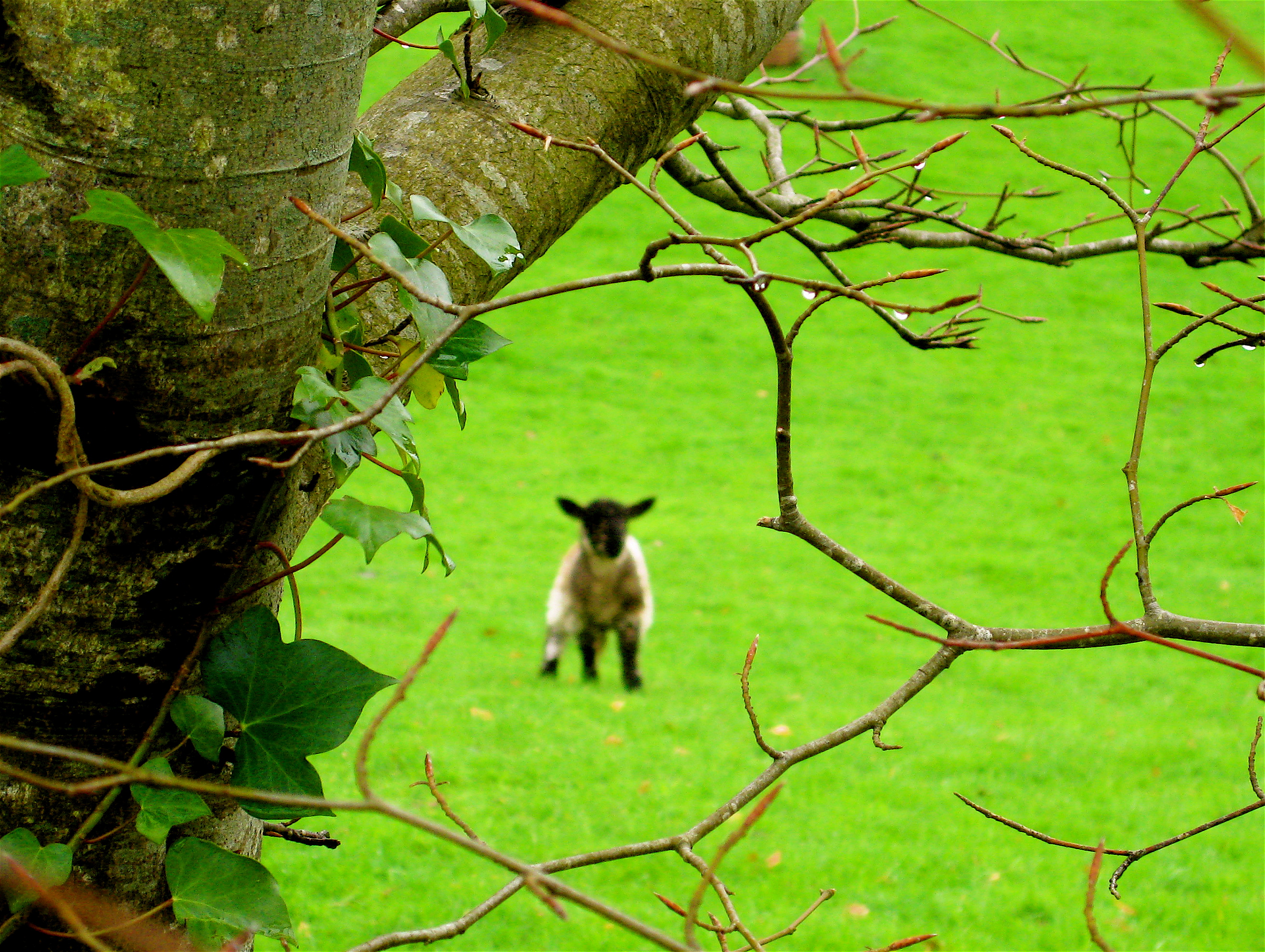
As adorable as most lambs are and as bad-tempered

as some goats can be, being sheep or goats

has nothing to do with why Jesus is telling the story

and what he means.  They are stand–ins:

 the goats do not go off to hell because they are goats,

but because they are nations that have not been

as human as humans should be.

The Lord Needs Them [Matthew 21:1-6]

It’s strange, to be sure, prompting many a doubt,

and even the scholars can’t figure it out

why Matthew, who no one would say is a dolt,

made Christ ride a donkey as well as her colt.

 Perhaps it was whimsy, just Matt being droll,

to mount the Messiah on filly and foal;

or maybe he found himself tied in a knot

when trying to make every tittle and jot

of prophecies old a meticulous fit

and didn’t know quite how to edit or quit

when verses came up that said “riding on two.”

We just can’t be certain, we don’t have a clue

why Christ so specifically (joking aside)

wants mother and offspring alike for his ride.

The question is open for you to opine

and your guess is good as the guess that is mine:

So I think that Jesus (this theory’s my own),

who knew what it’s like to be left all alone,

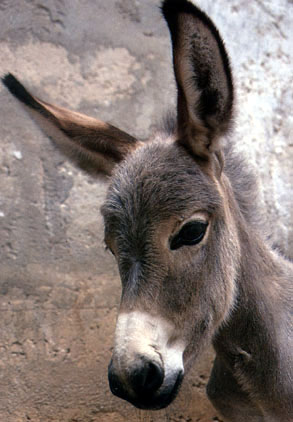
imagined the jenny apart from her foal

and felt donkey anguish knife into his soul,

and being a Mother himself, and so kind,

could simply not bear to leave baby behind.

The Swine Stick in My Mind [Mark 5:13]

It’s unbiblical to be sentimental

about swine. We are talking about

a herd of unromantic

Gentile meat and money, not

a herd of barnyard Wilburs,

pink and plump,

with plucky spiders for friends.

That said, the pigs stick in my mind.

I read commentaries.

I know the ways of different cultures,

ancient worldviews.

I understand the politics,

the story’s ethical edges.

Its justice dimensions have

preaching potential.

I should warm to it but

I hate what happened to the pigs.

I know that a bedeviled man

who was deader than

the corpses in the graveyard

where he spent his nights and days

in lacerating pain now sits adoring

at your feet, serene and safe.

It moves me that you thought

his sad hidden life

worth saving,

worth it too the ire of hard rustic men

who watched big money drown

in churning seas that day,

but this is still

one of those stories

I wish

no one had recorded.

The pigs stay with me all the way over the cliff,

and I am so astonished by you,

Jesus.

You could do everything,

even asking blind men,

What do you want me to do for you?

and then when they told you

you did it no trouble,

but for some reason, for some reason

we will never know,

you could not,

would not write “Some Wilburs”

in a web of creature

love.

The Camel Speaks for Himself [Matthew 19:24]


I am the schooner of the dunes,

a looming bow of treasure.

Beneath suns’ spice and silky moons,

I sail in pearls and pleasure.

The incensed princes of the East

recline upon my leather;

for eyes, an oriental feast

of tassels, bells and feather.

And when time comes to sleep and dream

I kneel on carpets, nesting.

The comet’s tail and planet’s gleam

concelebrate my resting.

So go ahead, make fun of me

in moral illustrations,

my hairy flanks and knobby knees,

my humpback undulations.

With metaphoric kick and push,

with metaphoric wheedle,

go on and try to shove my tush

through tiny eye of needle.

For I am blessed with regal sense.

My self-esteem is healthy.

Your jokes are not at my expense—

the joke is on the wealthy.

Likewise [Luke 10:34]

It was nothing to the donkey. She took the new bulk on her black-crossed back without a twitching glance over the sheen on her shoulder.

It was light, lighter than jars of cool clay condensing, lighter than milled grain in burlap, lighter than bales or bundled sticks. It smelled of oil and wine.

It was nothing to her, to plod downhill in the heat, to halt at quick commands. It was nothing to wait, snuffling at flies, while he tugged at the shifting load.

The war between sides, the intake of aggressive breath, the long human detour around the other kind, these were nothing to her. She took the new bulk on her black-crossed back.

It smelled of oil and wine, and it was light, but not lighter than hitchhiking sparrows, or his hand on the lead, or his stubborn step on the riddled roadway down.

Candlemas [Luke 2:22-36]


Simeon, full of the Spirit, nearly fainted

when he saw the child.

He snatched him from Mary,

which alarmed her until she heard his praise.

Then she and Joseph were astounded.

Just as Simeon gave him back,

wise old Anna came in

and began shouting about the messiah

in the dramatic way of prophets.

More amazement ensued.

The whole thing was like a scene in a Hollywood epic:

swelling score, meaningful glances, a beautiful child.

Yet when they finished doing what the Law required

and his parents took him home, left behind for the priests

were two bobble-headed birds, slate gray,

cooing in the quiet after the commotion,

just a few steps away from the knife

that’s always sharpening somewhere for the poor.

Agnus Dei

Medieval mockers sang the Mass

in Latin tongue in cheek,

upending what they’d learned by heart

from week to weary week,

inventing silly solemn chants,

ill-mannered and uncouth;

but one of them at least declared

a universal truth:

“O Christ,” they sang with sly delight,

as plain folk often do,

“You are the Lamb of God, and we

are on the lam from you!”


The Donkey Was Reliable [Matthew 2:13-15]

While Joseph locked the house and pocketed the key,

looking over his shoulder, alert for boots and steel,

your mother grabbed a dog-eared Goodnight Moon,

and two soft toys, strapped you in the car-seat

on the back of the beast, looped the bag over her arm,

and climbed on. The donkey was reliable

all the way to Egypt.

And now, O Jesus, risen from the dead,

we look to you to carry.

Whenever hearts too hard pursued need hiding

in some far safe place, we pack up fears and treasures

and climb on you.

Prepare Ye [Matthew 3:4b]

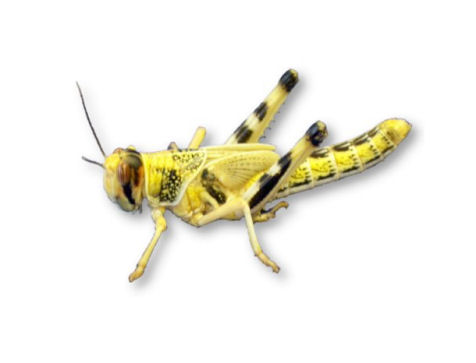
Those spring-loaded locusts you caught on the fly?  Try broiling or baking, or bread them and fry;

or snap off their noggins and set them to boil, then dry them and mince them and sauté in oil;

or serve them with garlic and saffron, or plain, and eat them at supper for starters or main;

or dust them with sugar and serve on a stick, or coat them in choc-o-late luscious and thick;

or pop them still thrumming, still blinking and raw,                               with no salt or ketchup right into your craw.  

These methods will make you a bug-eating whiz.   So how did the Baptist, I wonder, eat his?